
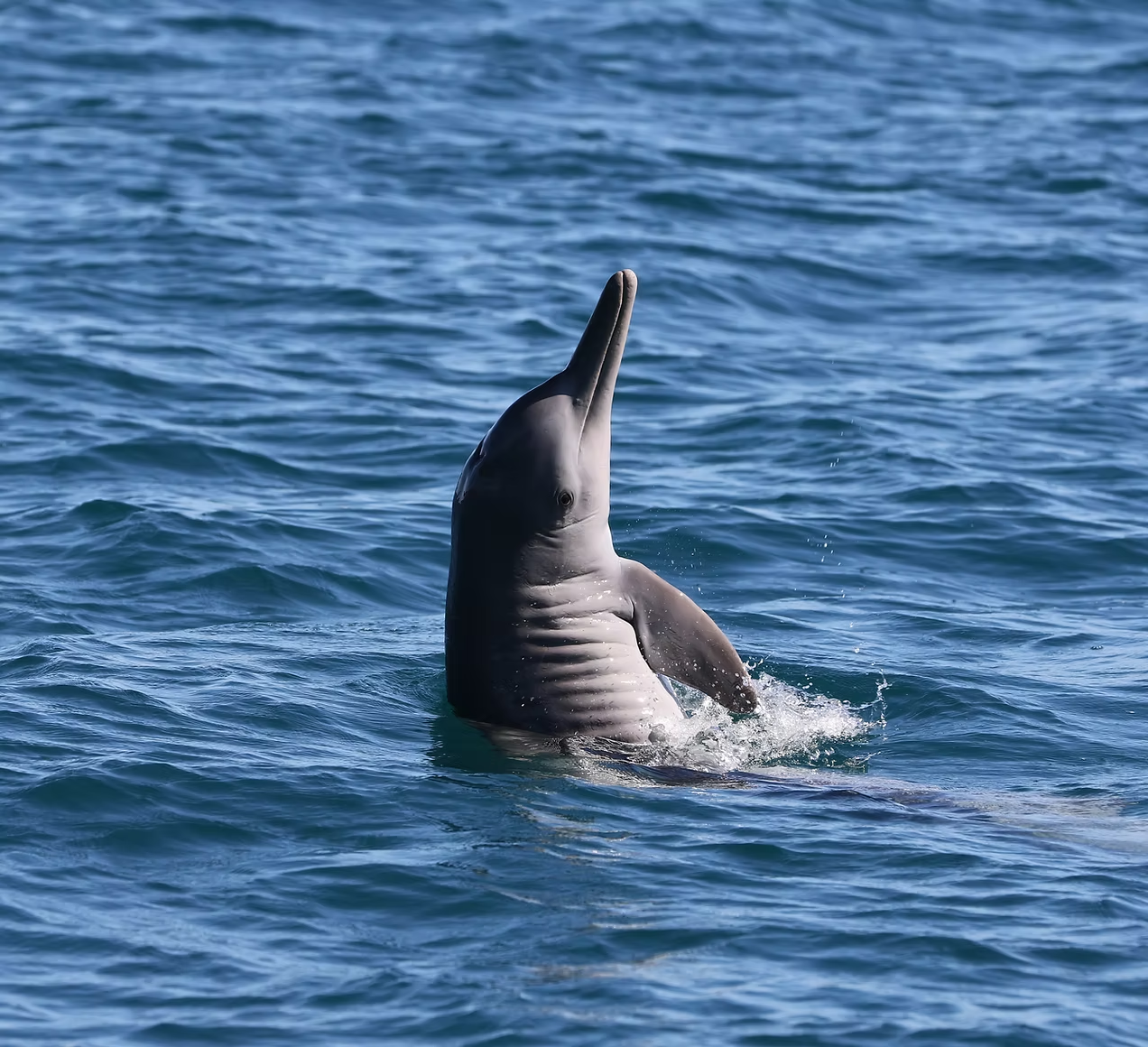
Once common across the western Indian Ocean, the humpback dolphin now persists in small, shrinking populations spread across 23 countries. Classified as Endangered and threatened by rapid coastal development, fisheries bycatch, and pollution, the species faces mounting risks, even in Abu Dhabi, home to its largest remaining population.
HuDoNET, the Indian Ocean Humpback Dolphin Conservation Network, is rising to this challenge with its newly published Action Plan: a concrete, collaborative roadmap designed to translate shared commitment into sustained action. Developed over more than a year through a rigorous conservation-planning process, the plan is supported by EACOP, Tshwane University of Technology, University of Pretoria, Zayed University, and the University of St Andrews, drawing on the collective expertise of nearly 100 members working across 18 countries.
Five thematic Working Groups systematically identified priority gaps, opportunities, and feasible actions across the species’ entire range, producing 13 Priority Actions. From rapid assessments in data-poor regions and coordinated analyses of existing datasets, to mapping bycatch risk hotspots, strengthening community-based conservation, and improving the integration of marine mammal protections into environmental policy, each of these recommendations is grounded in what can realistically be achieved, with clear timelines, budgets, and ownership.
The Action Plan is scoped to near-term targets, while also laying the groundwork for a longer-term Conservation Action Plan for the species. Read more at HuDoNet.org.
