
Take a Breath

is a UAE wide awareness and educational initiative drawing attention to the quality of indoor air and the importance of monitoring and improving it.

About the Initiative

TAKE A BREATH – Improving Indoor Air is an ongoing awareness Initiative designed to increase understanding of how indoor air quality affects physical health, cognitive performance, and overall wellbeing.

People spend up to 90% of their time indoors, whether at home, in school, or at work. Yet indoor air pollution often goes unnoticed. The campaign encourages individuals and organisations to monitor indoor air quality, identify sources of pollutants, and take simple, effective steps to reduce allergens, improve ventilation, and create healthier indoor spaces.

Supported by Take a Breath partners, the initiative contributes to the creation of cleaner, safer, and more resilient indoor environments across the UAE, combining scientific research, education, and accessible digital tools.

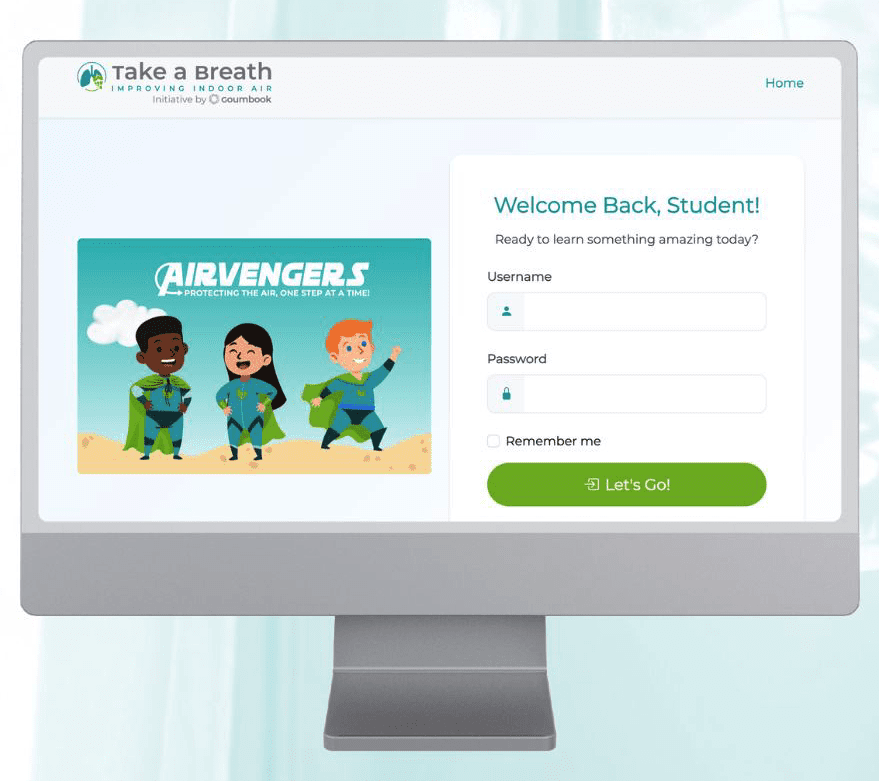
The Take a Breath Online Learning Platform is a free, interactive digital resource designed for students in Years 4–6 / Grades 3–5 (ages 8–11).

The platform supports online learning in the UAE through engaging content that helps students understand how indoor air quality affects health and daily life. Through animated videos, interactive games, and hands-on activities, students explore:

  • what indoor air quality is
  • where indoor pollutants come from
  • how everyday choices influence the air we breathe
  • practical actions to improve air quality at home and at school

The platform also supports educators with ready-to-use digital teaching resources aligned with national science curricula, allowing teachers to easily integrate environmental health topics into classroom or remote learning environments.

Dedicated sections for students, teachers, school leaders, and parents ensure the entire school community can access tailored tools that encourage collaboration and shared responsibility for healthier indoor spaces.
School leadership teams and parents can also connect with vetted solution providers to explore practical approaches to improving air quality in classrooms, homes, and shared indoor environments.

👉 Discover the Take a Breath Online Indoor Air Quality Learning Platform

As part of the Take a Breath initiative, an in-depth indoor air quality study was conducted across 10 UAE schools during the 2023–2024 academic year.

The study measured indoor air quality in classrooms before and after implementing targeted improvement solutions. The findings contribute to practical guidelines and best practices that support healthier learning environments and improved student wellbeing. The research supports growing recognition that healthy indoor environments play a critical role in both education outcomes and long-term health.

Why Schools?

Focusing on youth and the spaces where they learn is vital to building resilience in current and future generations. Children are especially vulnerable to the long-term effects of indoor air pollutants because their bodies are still developing. According to the American Lung Association, children breathe 50% more air per half kilogram of body weight than adults, which makes them more susceptible to pollutants.

Prolonged exposure during childhood can lead to health problems later in life. Schools therefore have an ethical responsibility to provide a safe, healthy learning environment. Regularly monitoring and improving indoor air quality supports this duty and helps build long-term student wellbeing and resilience. Research from the Philips Foundation and the University of Manchester shows that reducing indoor air pollution by just 20% can improve working memory by 6%—equivalent to four extra weeks of learning per year.

Education and Impact

Schools are powerful environments for building awareness around environmental health. By measuring indoor air quality and exploring practical solutions, students learn how daily behaviours influence the air we breathe. This knowledge encourages sustainable habits that extend beyond the classroom into homes and communities. Through both digital learning tools and real-world application, Take a Breath empowers young people to become advocates for healthier indoor environments.

Our Studies

Indoor Air Quality (IAQ) plays a critical role in employee wellbeing, productivity, and organisational performance. Poor indoor air can contribute to:

  • headaches
  • fatigue
  • respiratory discomfort
  • reduced concentration
  • lower productivity levels

Research from the Harvard T.H. Chan School of Public Health demonstrates that higher indoor pollutant levels are associated with measurable declines in cognitive function. Cleaner, well-ventilated indoor environments support improved decision-making, focus, and overall workplace wellbeing.

The Take a Breath Corporate Study (2024–2025) contributes to research on indoor air quality across UAE workplaces, generating data-driven insights that support healthier office environments and evidence-based wellbeing strategies. The study aligns with the UAE National Air Quality Agenda 2031, supporting national efforts to improve environmental health and indoor wellbeing.

Participating organisations contribute to a broader understanding of how indoor air quality impacts workforce health and performance across different sectors.

Why Participate?

As part of the Take a Breath initiative, we offer a range of opportunities to educate students about the importance of indoor air quality (IAQ) and how they can improve it in their schools, homes, and communities.

Interactive Awareness Sessions

Our awareness sessions engage students in discussions that highlight the impact of IAQ on their health and learning environments. These sessions inspire students to understand the importance of clean air indoors and motivate them to take action to improve it.

Gamified Workshops

Through engaging, hands-on workshops designed for entire year groups, students explore IAQ solutions in a fun and interactive way. These workshops empower students to take practical steps toward improving air quality in their schools, homes, and local communities.
By participating in these activities, students become advocates for cleaner, healthier air, spreading awareness and inspiring action to improve it.

Team Building: Creating Healthier Workspaces Together

This meaningful activity promotes environmental and health awareness while fostering teamwork and community impact. It’s an opportunity for employees to engage with a critical issue while contributing to their own well-being and the broader community.

Build One, Share One: For every terrarium made, a second is donated to local foundations and charities, giving the gift of cleaner air to those in need and extending the impact beyond the workplace.

Take a Breath also offers interactive corporate team-building experiences focused on improving indoor environments and workplace wellbeing. These sessions explore how small changes can have a measurable impact on indoor air quality.
Participants learn about the role of plants as natural air purifiers, helping reduce indoor pollutants and contributing to healthier indoor spaces.

During the hands-on activity, teams create their own terrariums while learning about indoor air pollution sources and practical strategies to improve indoor environmental quality. The experience combines education, creativity, and sustainability awareness, helping organisations foster healthier and more productive workplaces.

Did You Know?

Indoor air often contains a complex mixture of pollutants and environmental factors that can affect health and comfort. These could include various allergens such as dust mites, mould spores and pet dander, but also:
  • Particulate Matter (PM2.5) – fine particles with a diameter of 2.5 micrometers or smaller circulating in closed environments, coming from both indoor and outdoor combustion sources. Sources vary between human-related activities (e.g., vehicle emissions, industrial processes) and natural events (e.g., wildfires, dust storms). These particles can penetrate deep into the lungs, causing respiratory and cardiovascular issues.
  • Carbon Dioxide (CO₂) – a natural gas exhaled by humans. Concentrations are high in poorly ventilated spaces with high occupancy, and elevated CO₂ levels can lead to drowsiness, decreased cognitive performance, and discomfort.
  • Volatile Organic Compounds (VOCs) – gases emitted from certain solids or liquids. Sources vary between building materials (e.g., paints, varnishes, adhesives), furnishings, office equipment (e.g., printers, photocopiers) but also emitted from daily household products like all-purpose cleaners and even perfumes and air fresheners. Some examples of these airborne- Benzene, Formaldehyde, Toluene
Indoor air pollutants can cause damage to most organ systems in the body, not just our lungs and airways. Air pollution has been linked to cardiovascular deaths, stroke deaths and malignancies such as childhood leukemia and bladder cancer, in addition to diabetes mellitus prevalence, morbidity and mortality. Air pollution is also associated with reduced cognitive functions, delayed psychomotor development and lower intelligence. Moreso, there have been links made with It weakens immune systems and is associated with onsets of allergic rhinitis, allergic sensitization and autoimmunity. Physical effects can range from osteoporosis and bone fractures, conjunctivitis, dry eye disease, blepharitis, inflammatory bowel disease, increased intravascular coagulation, and decreased glomerular filtration rate. Indoor air pollution can be the cause for simple headaches to more complicated impacts such as infection with Legionella bacteria and carbon monoxide poisoning. Taking action to reduce our exposure to indoor air pollution – which is absolutely manageable – is an imperative!
The United Arab Emirates has made indoor air quality a national priority with ambitious targets to reduce air pollution and improve indoor air quality. UAE Vision 2021 aims to raise the air quality to 90 per cent in the UAE The UAE National Air Quality Agenda 2031 was released in September 2022 to mark the International Day of Clean Air for Blue Skies, providing a framework for improving indoor air quality and reducing the risks to human health. This framework seeks to:
  • Establish effective policies and institutional frameworks.
  • Enhance technical and human resource capacities.
  • Promote scientific and academic research.
  • Leverage advanced technology for better air quality management.
These commitments align with global efforts to combat air pollution, protect public health, enhance environmental sustainability, progress on net-zero emissions, adopt green building design and sustainable building standards in addition to implementing air quality monitoring among other technological innovations.
AN INTERCONNECTED CHALLENGE – One of the primary drivers of anthropogenic (or man-induced) climate change is the burning of fossil fuels for energy. This releases greenhouse gasses like carbon dioxide into the atmosphere, contributing to global warming which then sets a series of consequences that include extreme weather events. The footage of the series of sand and dust storms, heatwaves and wildfires over the summer in different parts of the world is a testament of the transboundary impacts of climate change, with dust, smoke, smog and particulate matter finding a way to seep into our indoor spaces causing a buildup of allergens and pollutants like carbon monoxide, nitrogen oxides and particulate matter, which can have adverse health effects.
These pollutants coming from outdoors can then be trapped indoors and get coupled with a higher concentration of indoor pollutants that result from indoor combustion sources like cooking for instance. To make matters worse, warmer temperatures as a result of global warming, can create favorable environments for mold to grow, leading to exacerbating allergies and intensifying other health conditions especially in poorly ventilated buildings. This complex relationship between climate change and indoor air pollution requires collective action to both mitigate its impact but also adapt to its consequences. Addressing the interconnected natures of this global challenge provides a range of opportunities for improvement by encouraging the adoption of cleaner energy sources and better building practices. For more information on the link between climate change and indoor air pollution, click here to listen to this relevant podcast.

WHERE TO START –While taking action to improve indoor air quality is crucial as it directly impacts human health and wellbeing, how does one begin? With a few simple solutions presented here, the journey to improving indoor air quality does not have to be an overwhelming one.

Smart Spaces, Smart AirKnowledge is power. Monitoring your indoor air quality through state-of-the-art technologies (that are readily available and affordable) can help you improve your indoor air quality. Smart air quality monitors can keep you informed about indoor conditions and the types of pollutants present in your indoor spaces, allowing you to take action when needed.

Smart Air Monitoring

Nature’s SolutionPlants can naturally purify the air. Studies from NASA have shown that certain plants, like the Peace Lily, can remove harmful chemicals from indoor environments.

Nature Solution

Keep It CleanPeriodical care when it comes to your air conditioners (AC) is necessary to reduce outer pollutants reaching your indoor environments. As a minimum, clean your AC filters quarterly and AC ducts annually. Do not forget to also vacuum surfaces regularly to deal with common allergens.

Clean AC

Air Purifiers at Your ServiceWith many air purification options in the market, choose the one that suits you best. Air purification systems can be installed in the HVAC systems, or standalone air purifiers powered by high-efficiency particulate air (HEPA) filters can be added to your living spaces to effectively capture allergens and pollutants, making your indoor air cleaner and healthier.

Air Purifier

Ventilation MattersGood ventilation ensures a continuous flow of fresh outdoor air, diluting indoor pollutants. Opening windows and using exhaust fans can make a significant difference.

Ventilation

Monitor the HumidityTo avoid moisture collecting indoors and avoiding an environment that then grows mold, humidity levels need to remain between 30 to 50 percent.

Monitor Humidity

Greener AlternativesWe are responsible for releasing hazardous substances into our atmosphere. Perfumes, hair sprays, air fresheners, and paints emit an equal amount of chemical vapor as the emissions of petrol from cars! Combustion sources such as candles and tobacco products fill the air with carbon monoxide and nitrogen dioxide. Some fabrics and furniture in addition to the chemicals we use to clean our houses, schools, and offices can emit volatile organic compounds around us. It is important to rethink our consumption of such products to eliminate the source of pollution and substitute them for nature-based, non-toxic alternatives.

Please Click Here to view our Solution Partners.

Greener Alternatives

Knowledge Partners​

take a breath, goumbook, social and environmental responsibility

Advisory Board

Deepthy K B
Regional Director, Market Development

GBCI Middle East

Dr Diana Francis
Assistant Professor, Earth Sciences

ENGEOS Labs, Khalifa University

Dima Al Srouri
Founder

Biospheric City Lab

Faizal Hasham
General Manager

AQM

Heba Safi
Technical Officer on Air Quality and Health, World Health Organization

Regional Centre for Environmental Health Activities, Amman, Jordan

Dr. Iyad Al-Attar
Visiting Academic Fellow

Cranfield University

Jie Zhao
WELL Faculty, Head of Delos Labs, Executive Vice President

Delos

Majd Fayyad
DSM Strategy & Policy Lead & Director & Board Member Advancing Net Zero Volunteering Team

Dubai Supreme Council of Energy

Mónica Ubalde López
Research Scientist at the Climate, Air Pollution, Nature and Urban Health Program, Barcelona Institute for Global Health

ISGlobal

Oriol Teixido
WHO Advisor & Associate Director, Air Quality and Climate Change

Ricardo

Dr Srikanth Sola
CEO & Co-Founder


Devic Earth

Dr Safeena Kherani
Paediatric Otolaryngology-Head & Neck Surgery Consultant

Al Jalila Children's Hospital

Tatiana Antonelli Abella
Founder & Managing Director

Goumbook

For more information about Take a Breath

In the Press