
Contributed by International Coalition for Sustainable Infrastructure (ICSI); MENA Oceans Network Member.
Ports are critical elements of global infrastructure and trade, facilitating almost 90% of international commerce. However, rising sea levels, stronger storms, extreme heat, and coastal erosion increasingly threaten port operations, supply chains, and the communities and ecosystems they coexist with.
As such, strengthening resilience is essential to maintain continuity of port operations, and help foster economic growth while safeguarding environmental sustainability.
Climate Risk Assessment: A Practical Tool for Decision-Makers
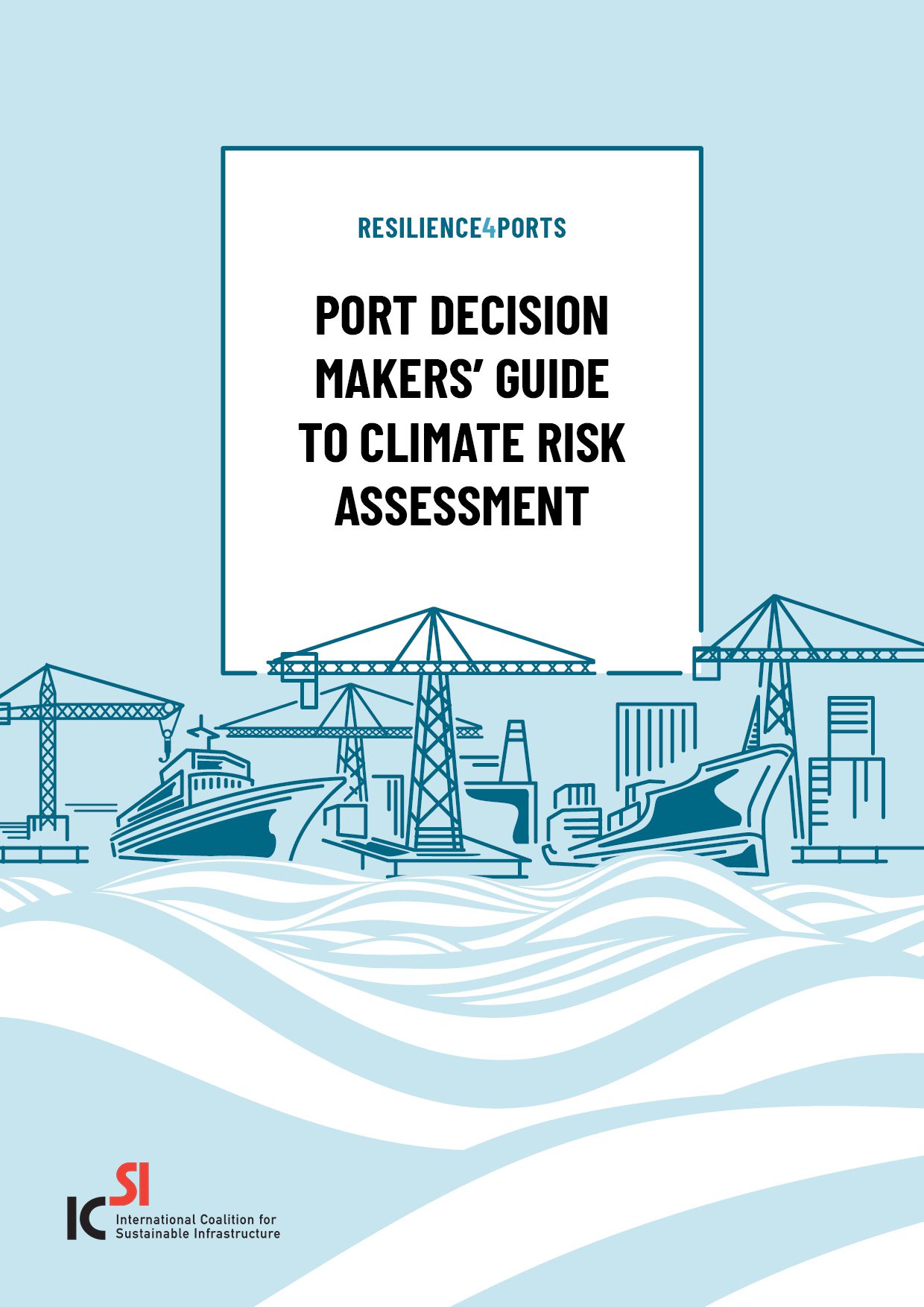
The Resilience4Ports (R4P) initiative, led by the International Coalition for Sustainable Infrastructure (ICSI) and supported by core partners Arup, the UN Climate High Level Champions, and Lloyd’s Register Foundation, has developed comprehensive practical guidelines to help ports assess risks and explore structural and non-structural adaptation measures via Climate Risk Assessments (CRAs).
Effective climate adaptation in ports requires integration across the infrastructure lifecycle, from master planning and design standards to procurement, operations, and emergency preparedness. The Port Decision Makers’ Guide to Climate Risk Assessment encompasses these considerations, offering an actionable approach for future-proofing maritime infrastructure by safeguarding supply chains, attracting investment, and contributing to sustainable growth in an era of accelerating climate change.
The guidance places particular emphasis on nature-based solutions, including mangrove restoration, wetland preservation, and hybrid green-gray infrastructure, for their ability to deliver co-benefits including biodiversity protection and carbon sequestration.
Lessons from Mombasa
The approach has been piloted at Kenya’s Port of Mombasa, East Africa’s largest maritime gateway, successfully demonstrating how systematic evaluation can support immediate operational improvements while guiding strategic investment planning aligned with national development goals.
Following this, the guidelines are laying the foundation for mainstreaming CRAs globally to support resource-constrained ports in strengthening climate readiness while integrating environmental sustainability into maritime infrastructure development, transforming resilience from a technical exercise into a strategic advantage.
Read the full guide at Resilience4Ports (R4P): Port Decision Makers’ Guide to Climate Risk Assessment (CRA) – International Coalition for Sustainable Infrastructure
