
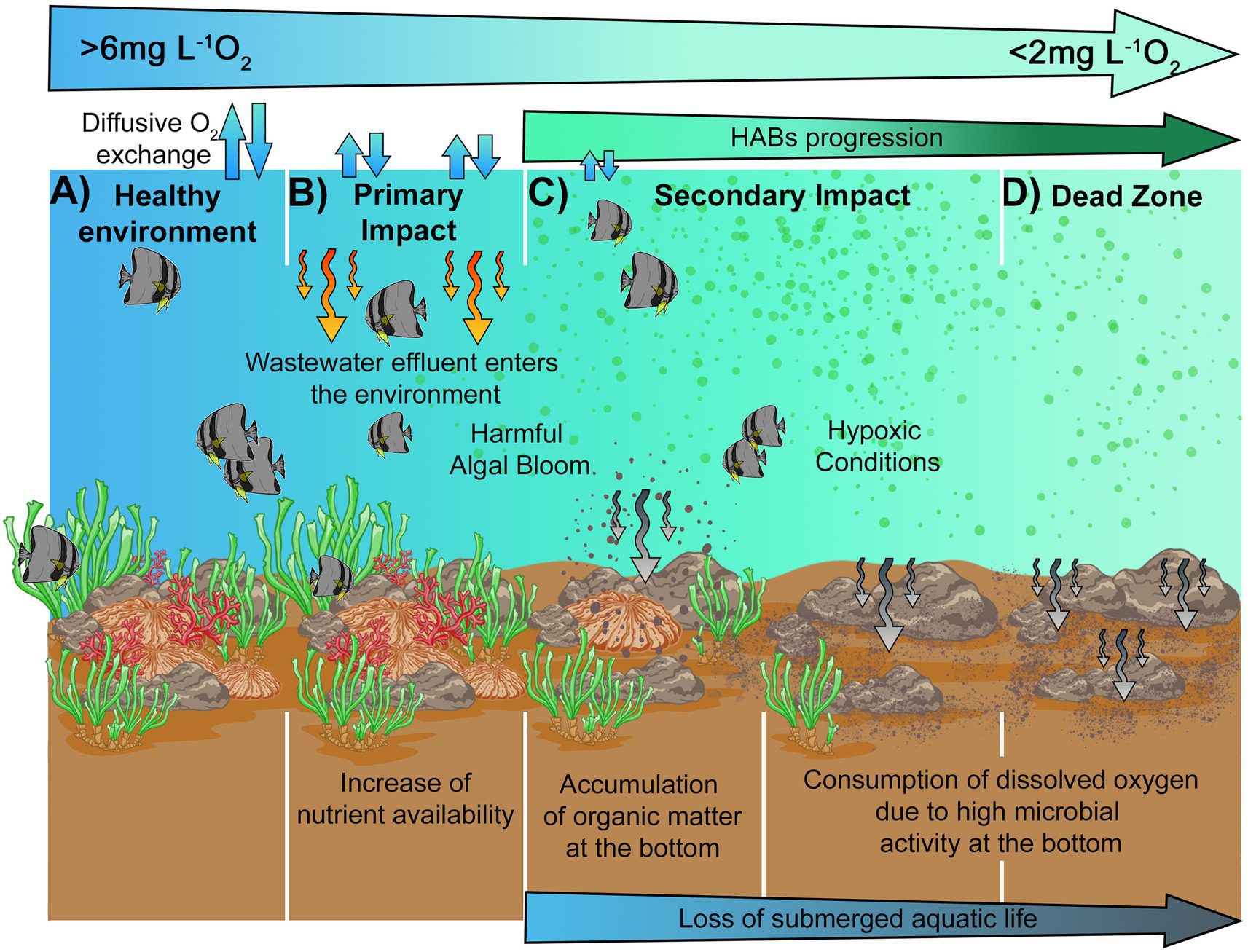
Coastal eutrophication is a global concern, but its drivers differ sharply across regions. In many marine basins, agricultural runoff is the primary source of nutrient enrichment. The Arabian Gulf, however, presents a distinct case. Here, municipal wastewater discharge, rather than farming, is the dominant contributor of nitrogen and phosphorus into coastal waters.
This distinction is especially significant in a basin that is already one of the most extreme marine environments on Earth: shallow, hypersaline, and subject to summer sea temperatures exceeding 36°C. When untreated or insufficiently treated wastewater is added to this fragile mix, the ecological risks multiply, pushing ecosystems toward harmful algal blooms, oxygen depletion, and biodiversity loss.
NYU Abu Dhabi Water Research Center Identifies Escalating Risks and Opportunities
A new paper by researchers at New York University Abu Dhabi Water Research Center (WRC) — Lucia Gastoldi, Amal Al Gergawi, and MENA Oceans Initiative Advisory Board member Prof. John Burt — highlights both the scale of the challenge and the opportunity for transformation. From effluent to algal bloom: linking wastewater infrastructure, nutrient enrichment, and ecosystem stress in the Arabian Gulf reveals that Gulf cities generate 8.6 billion cubic meters of wastewater annually, a staggering volume more than six times the outflow of the Tigris-Euphrates rivers.
Because treatment standards and practices vary widely across the eight Gulf nations, much of this wastewater enters the sea with high nutrient loads. The consequences are increasingly visible as harmful algal blooms (HABs) spreading across semi-enclosed bays and lagoons; hypoxic conditions where dissolved oxygen drops below survivable levels, and resulting mass mortalities of marine organisms, threatening biodiversity and fisheries. The report warns that climate change will intensify these impacts as rising sea temperatures exacerbate oxygen depletion and ecosystem stress.
Yet the findings also point to a clear opportunity: wastewater management can become a cornerstone of resilience in the Gulf. By investing in advanced treatment, harmonizing standards, and reusing reclaimed water, Gulf nations and industries can simultaneously reduce ecological risks and unlock new pathways for sustainable urban growth.
Recommendations for Industry and Policy
The authors’ recommendations for addressing wastewater-driven eutrophication include:
- Harmonised effluent standards across the region to reduce nutrient inputs;
- Investment in tertiary treatment technologies capable of removing residual nutrients and pathogens;
- Improved monitoring and data sharing to strengthen evidence-based policymaking;
- Strategic reuse of reclaimed water, reducing freshwater scarcity while cutting nutrient discharge.
Wastewater management is emerging as a central aspect of the Gulf’s ecological and economic resilience. Addressing nutrient enrichment is key to protecting key ecosystems including coral reefs, seagrass beds, and mangroves, and safeguarding food security, tourism, and urban growth in one of the world’s most climate-stressed regions.
Read the full paper here: https://www.frontiersin.org/journals/water/articles/10.3389/frwa.2025.1702212/full
