
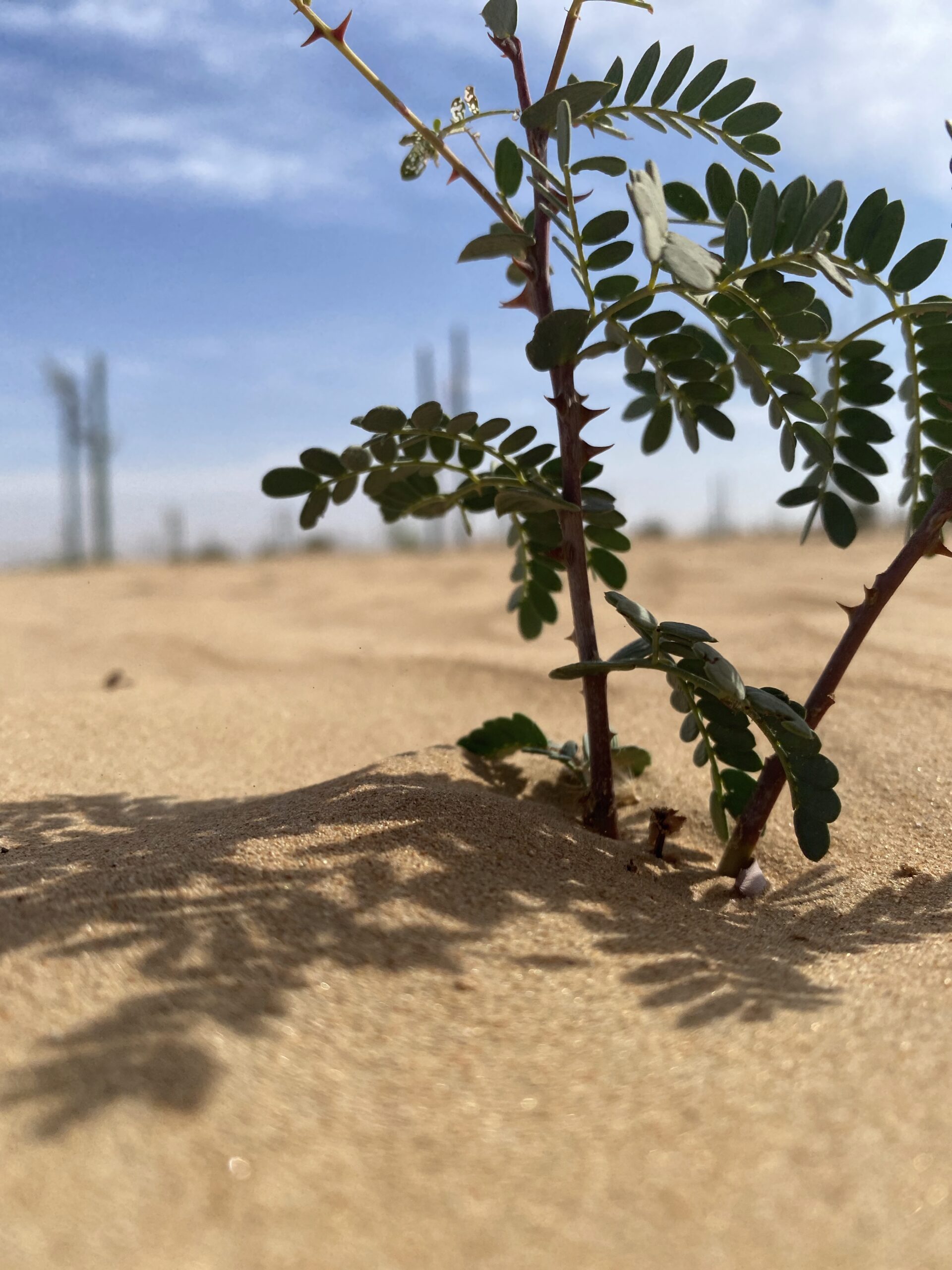
A groundbreaking scientific collaboration between the Environment Agency – Abu Dhabi (EAD) and the International Centre for Biosaline Agriculture (ICBA) has unlocked the most detailed genetic understanding to date of the UAE’s national tree, the Ghaf (Prosopis cineraria). This first-ever population genomics study marks a major milestone for desert ecology and strengthens the foundation for tree planting, habitat restoration, and climate‑resilient conservation across the Emirates.
As the national tree of the United Arab Emirates, the Ghaf carries profound ecological, cultural and symbolic importance. It anchors shifting dunes, enriches nutrient‑poor desert soils and provides essential habitat for wildlife across arid landscapes. Yet despite its central role in the region’s natural heritage, the Ghaf’s genetic diversity and evolutionary history remained largely unknown until this pioneering research finally revealed the complexity of its genetic makeup.
Protected under federal law, the Ghaf thrives in extreme desert conditions thanks to its deep roots, heat tolerance and ability to stabilise fragile ecosystems. It also plays a vital role in climate action by absorbing carbon and curbing desertification.
While a 2024 study mapped the Ghaf genome, this new research goes further by analysing genetic variation across populations throughout the UAE. Samples were collected from:
- Coastal plains
- Valleys
- Sand dunes
- Mountain slopes
- Foothills of the Hajar Mountains
- Jebel Hafeet National Park
Key Findings:
- Four genetically distinct Ghaf groups were identified.
- One population found in the Hajar foothills and Jebel Hafeet appears to be genetically original, potentially representing an evolutionarily unique lineage.
- Genetic markers linked to heat tolerance, salinity resilience, and drought adaptation were uncovered.
The study was conducted by a team of seven specialists, botanists, ecologists, biotechnologists and bioinformaticians working over two years to decode the Ghaf’s genetic landscape. Their work lays the foundation for long-term conservation planning rooted in evidence-based science. A representative from EAD noted that understanding these differences is essential for identifying “the most crucial and significant variations” that guide conservation decisions.
Two major digital tools were developed as part of the project:
- Interactive genomic map showing genetic variation across the UAE
- Phylogenetic tree viewer visualising evolutionary relationships among Ghaf populations
These tools help scientists and policymakers understand how populations diverged over time and how environmental pressures shaped their evolution.
The findings also reinforce the work of community-driven campaigns such as Goumbook’s Give a Ghaf planting programme. For more than a decade, Give a Ghaf has focused on raising awareness about the importance of native species and promoting responsible, small‑scale tree planting that supports afforestation, agroforestry, urban greening and biodiversity enhancement. With the new genomic insights, these awareness efforts can now be strengthened by science-based guidance on which Ghaf populations are best suited for specific environments. This ensures that every planting activity, whether for education, restoration or climate action, contributes meaningfully to long-term ecosystem resilience and the protection of genetically distinct Ghaf lineages.
What This Means for Conservation and Tree Planting
The study’s insights are already reshaping how the UAE approaches biodiversity stewardship and native tree planting initiatives.
Smarter Seed Banking
Genetically distinct populations can now be prioritised to preserve maximum diversity.
Climate‑Smart Restoration
Matching the right Ghaf genotypes to the right environments will improve survival rates in areas affected by desertification, salinity or extreme heat.
Habitat Rehabilitation
The findings support programmes such as community-led efforts like Goumbook’s Give A Ghaf planting programme, which encourages residents and organisations to plant native trees responsibly..
Assisted Gene Migration
Populations with traits linked to climate resilience can be used to strengthen vulnerable ecosystems.
Ahmed Al Hashmi, Executive Director, EAD, highlighted that the Ghaf is “a living example of resilience” and that genomic evidence will guide targeted policies aligned with future climate conditions.
Beyond the Ghaf: A Growing Genetic Library
Following the success of the Ghaf study, EAD has partnered with M42 to sequence the genomes of 12 additional native plant species, including qafas, sarh, qurm, samr, salam, arfaj, shua, Ochradenus arabicus, ghadaf, and three seagrass species.
This initiative aims to build an extensive genetic library to support conservation, research and innovation across the UAE’s diverse ecosystems.
A New Era for Desert Ecology
The Ghaf genomics study represents far more than a scientific achievement—it is a blueprint for the future of conservation in the UAE. By integrating cutting-edge genomic science with national biodiversity goals and community-driven movements like Goumbook’s Give A Ghaf Planting programme, the UAE is pioneering a model for protecting native species in some of the world’s most challenging environments.
