
Contributed by Nada Abdelkader (Marine Ecologist; MENA Oceans Network Domain Specialist)
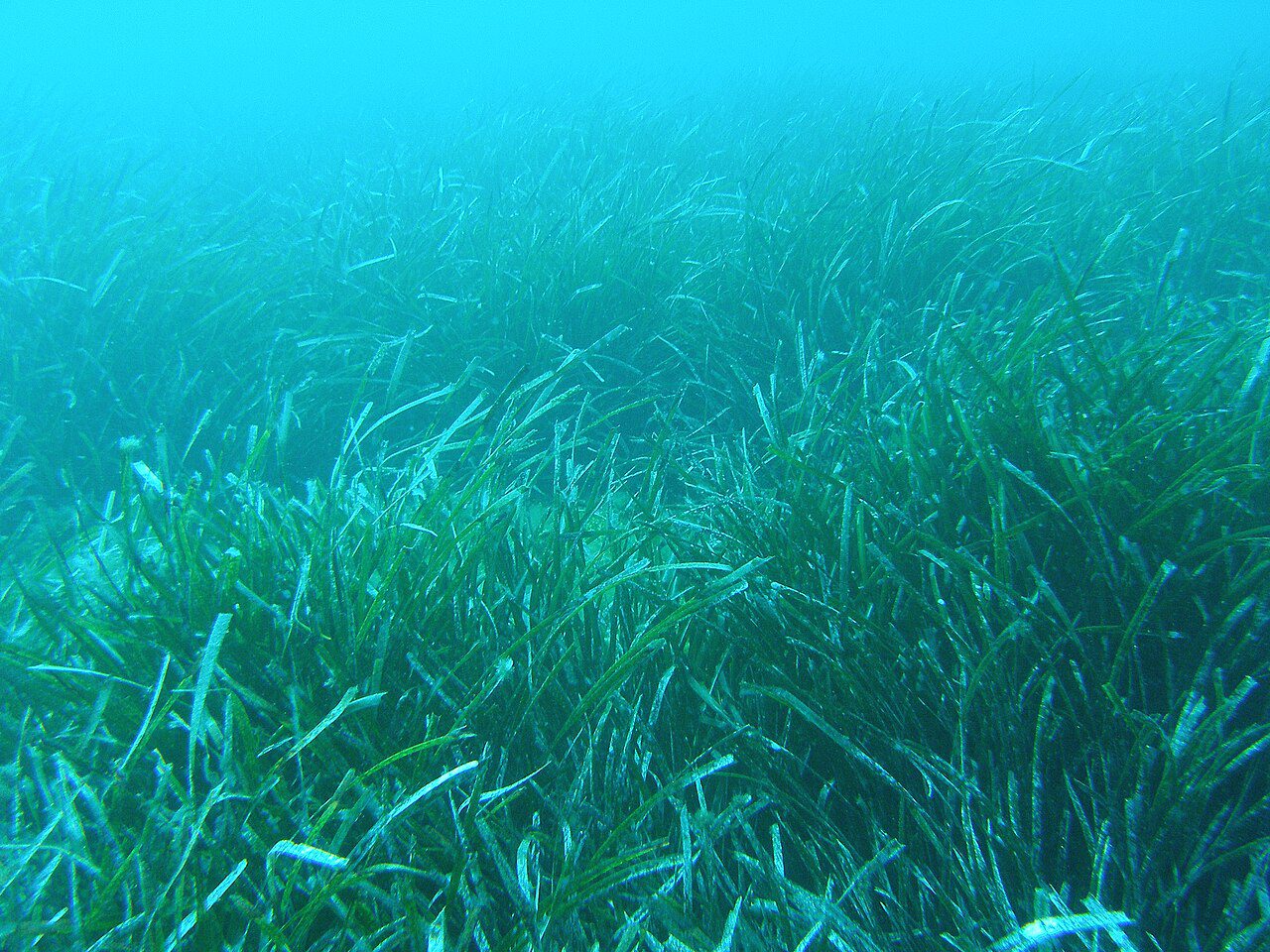
A team of Tunisian scientists and community leaders, including Nada Abdelkader (Marine Ecologist; MENA Oceans Domain Specialist) is driving one of the Mediterranean’s most innovative seagrass‑restoration efforts, combining generations-old traditional fishing knowledge with modern ecology to revive degraded Posidonia oceanica meadows.
Across the Gulf of Gabes, an estimated 80% of Posidonia meadows have disappeared due to pollution, overfishing, and illegal trawling. For islanders in Kerkennah, this loss is not only ecological but cultural, threatening the UNESCO‑recognised Charfiya fishing system that relies on healthy seagrass in shallow coastal waters.
A Community‑Led Solution
Scientists from the Tunisian Association of Taxonomy (ATUTAX) teamed up with local fishers, women artisans, and community members to co‑design eco‑friendly restoration tools inspired by Charfiya techniques. Using palm leaves woven by local women, the team successfully restored 300 square meters of seagrass meadow, with fishers now acting as co‑managers and on‑the‑water monitors at the site.
Supported by the Knowledge and Scientific Network (KSN), the initiative has grown from a pilot project into a catalyst for local policy change. The municipality now collaborates directly with scientists and residents to develop new coastal regulations, embedding community stewardship into formal governance.
This nature‑based approach shows how ecological restoration can protect marine ecosystems, create livelihoods, reinforce cultural identity, and support sustainable fishing. Ultimately, the project underscores the power of community engagement: when local people lead restoration efforts, the outcomes become more meaningful, more resilient, and more sustainable. Read more about the project HERE.
