Contributed by: Dr. Guilherme Abuchahla, Senior Technical Lead, Middle East Mangrove Knowledge Hub at Goumbook
The seventh Mangrove, Macrobenthos and Management conference (MMM7) was held in Ishigaki, Japan (1-5 July), convening researchers across the full range of mangrove science. This summary covers two aspects: the priorities emerging across the field globally, and the findings presented at MMM7 with direct relevance to West Asia.
Mangroves are often presented as a relatively simple climate solution: protect existing forests, plant more trees, and benefit from carbon storage, coastal protection, and greater biodiversity.
The message from the seventh Mangrove, Macrobenthos and Management conference (MMM7) was more complex. Mangroves are powerful nature-based solutions, but their success cannot be measured by the number of seedlings planted. It depends on whether the wider ecosystem is functioning properly, including its hydrology, sediment movement, biodiversity, greenhouse-gas exchanges, governance, and ability to recover over time.
Global priorities: from extent to ecological function
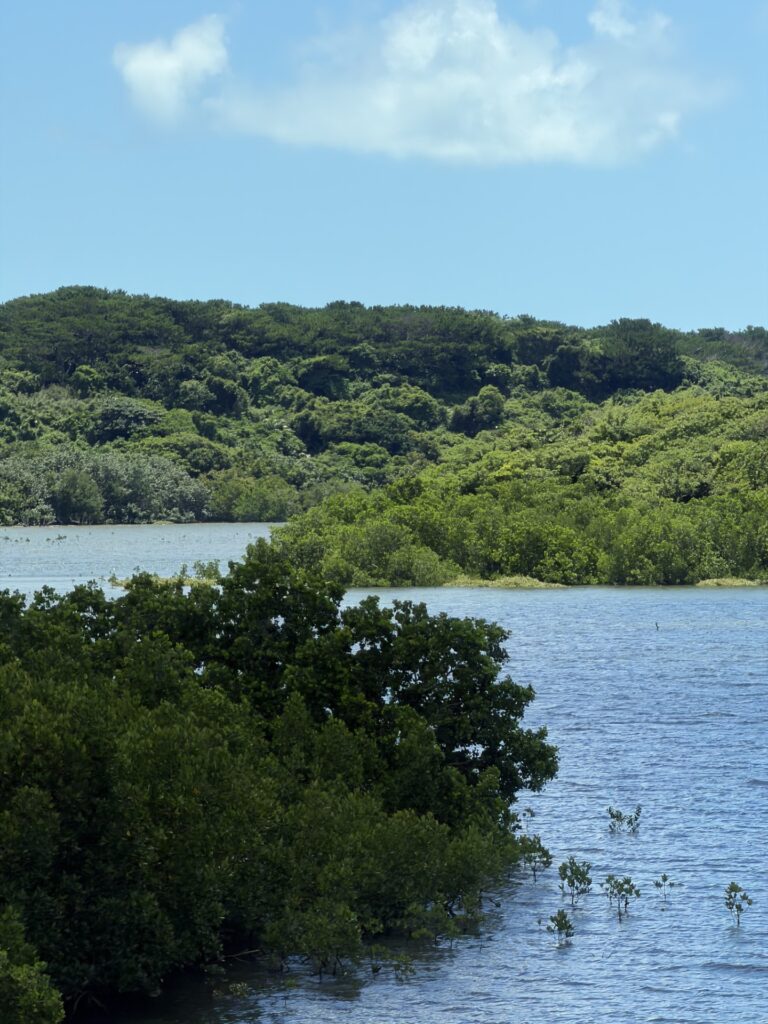
Six themes structured the MMM7 programme: 1) climate resilience and sea-level rise; 2) blue carbon and greenhouse-gas accounting; 3) biodiversity and ecosystem function; 4) remote sensing and automated monitoring; 5) restoration effectiveness; and 6) the governance of mangrove social-ecological systems.
Sea-level rise and extreme climate events were central, with researchers asking whether mangroves can build enough elevation to keep pace with the rising seas, or if they can migrate inland, recover from heatwaves, cyclones, freezing events, and even large-scale dieback.
As in the previous editions of the conference, blue carbon remained a major focus, though much more cautiously this time around. A few presentations explored blue methane and the movement of greenhouse-gases through roots and stems, whether restoration actually meant additional carbon storage, and the practical limitations of carbon markets.
Biodiversity monitoring also entered a new technological phase. Researchers presented work using environmental DNA (eDNA), automated cameras, artificial intelligence, LiDAR, and high-resolution satellite imagery to understand what is happening inside mangrove ecosystems, not just where they are located.
Across all six themes, the field’s established baseline metrics – forest extent, deforestation rates, carbon stocks – are being supplemented by a stronger focus on ecological processes: whether a system is recovering in ways that can be measured, not only in ways that can be mapped or visualised.
Climate resilience and sea-level rise (SLR)
Sea-level rise effects hang in a balance between sediment supply, tidal energy, coastal geomorphology, species-specific traits, and the physical space available for inland migration. Evidence from long-term field observations, sediment cores, LiDAR, and satellite archives show that mangrove resilience is real but neither universal nor guaranteed. Forests on sediment-starved coastlines and heavily developed waterfronts were identified as the most sensitive to SLR.
Forest extent vs ecological condition
An updated Global Mangrove Watch analysis spanning 1985 to 2025 found no significant net change in global mangrove area over four decades (Pete Bunting et al., oral presentation, Day 3). This global figure masks significant national and regional variation. In response, researchers proposed a global framework for monitoring mangrove degradation, designed to capture declines in structural complexity, biomass, and species composition even where a forest remains mapped as intact. The finding carries a direct implication for monitoring practice: stable or expanding mapped area is not, on its own, evidence of ecosystem health.
Blue carbon accounting
The conference showed a shift towards greater rigour in blue carbon science. Work on methane emissions from sediments, trunks, and roots, and on how burrowing crabs, microbial networks, and tidal cycles affect greenhouse-gas fluxes, is driving a move towards more complete, ecosystem-wide carbon budgets rather than sequestration-only accounting. Discussion of carbon additionality, voluntary carbon markets, and land tenure reinforced the need for stronger baselines, transparent benefit-sharing, and monitoring frameworks that weight ecological health alongside tradable credits.
Restoration effectiveness
The evidence presented on restoration was consistent: planting is one component of restoration, not a proxy for it. Project outcomes were shown to depend on hydrology, elevation, tidal flushing, sediment characteristics, and species selection. A study from Qatar provides a concrete illustration of this principle applied to site-selection.
Monitoring technology and governance
Environmental DNA metabarcoding, automated camera traps, bioacoustic recorders, and machine-learning-assisted remote sensing are extending the scale at which ecological monitoring can operate, though researchers noted these tools remain dependent on ground-truthing and local taxonomic expertise. A parallel body of work addressed mangroves as social-ecological systems, covering community participation, traditional ecological knowledge, land tenure, and benefit-sharing. A recurring finding was that blue-carbon credit generation and biodiversity targets do not always align with the needs of local communities.
Research and outcomes pertinent to West Asia:
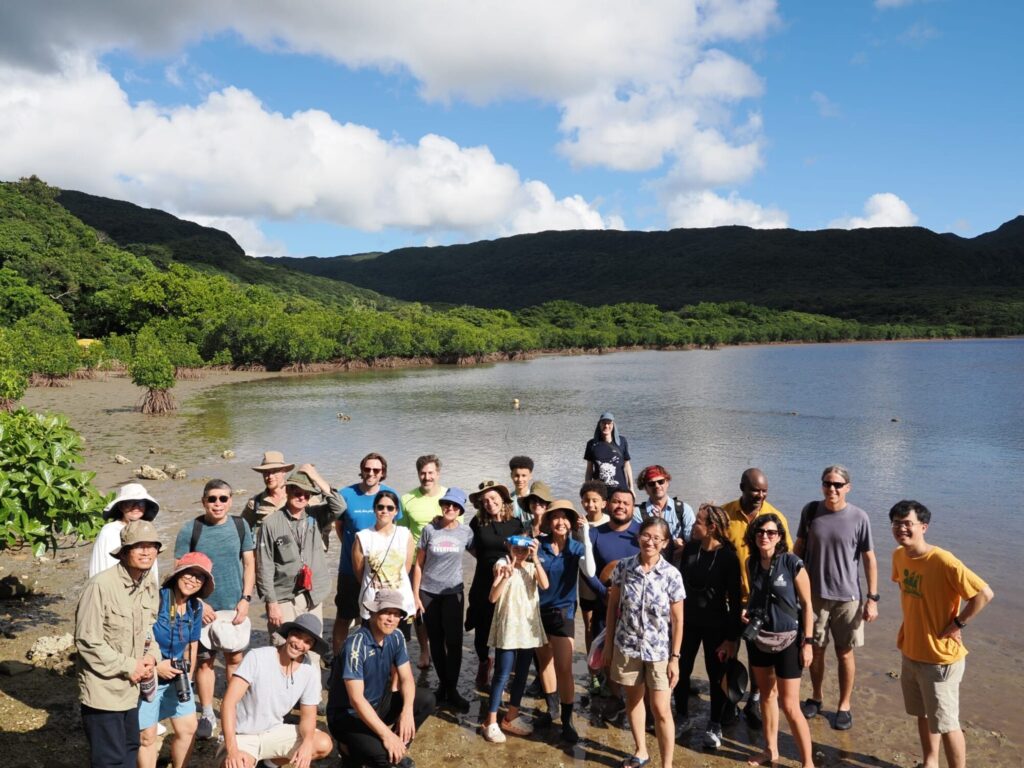
Four findings from MMM7 were directly relevant to the West Asia region: one global dataset with a country-level regional signal, and three country-specific studies from the UAE and Qatar.
Global Mangrove Watch Extent and Change 1985–2025: Drivers and causes of change
Pete Bunting, Lammert Hilarides, Ake Rosenqvist, Paula C. B. Vaz dos Santos, Jessica Rosenqvist, Thomas Worthington, Catherine Waite, and Gregory Oakes
Oral Presentation | Day 3
The same Global Mangrove Watch analysis referenced above shows sharp divergence at country level beneath the flat global figure: Indonesia, Malaysia, and Myanmar continue to lose mangrove cover, while most West Asian countries, including the UAE, are recording net gains. Researchers attributed these gains to sediment movement, active planting programmes, and improved hydrological connectivity.
This is one of the few positive country-level results presented at the conference, and it is subject to the same caveat raised throughout MMM7: increased mapped area is not evidence of ecological function. A forest can expand while remaining structurally simple, poorly connected to surrounding habitats, or vulnerable to future sea-level rise. The implication for the region is that mapping needs to be paired with field measurement of elevation, water flow, sediment condition, and biodiversity, and that restoration targets should specify the ecological function a project is intended to restore, rather than seedling or hectare counts alone.
Salinity as the Main Environmental Stress Driver in Filtering the Bacterial Community Structure in Arid Mangrove Ecosystem
Alsayeda Zahra Salman, Henda Mahmoudi, Shunsuke Matsuoka, Tadashi Ookami, and Ryunosuke Tateno
Poster | Day 2
The research assessed sediments from three planted UAE mangrove sites across seasons, tidal positions, vegetation types, and forest ages. Electrical conductivity, used as a proxy for salinity, was found to be the strongest driver of change in bacterial community structure. Older forests showed lower alpha diversity but stronger microhabitat differentiation and denser, salinity-filtered networks. Since microbial communities drive nutrient cycling and carbon processes, the finding indicates that belowground biological indicators should be included in the evaluation of arid mangrove plantations and their blue carbon performance; surface condition alone is not a reliable proxy for ecological function below ground
An Integrated Assessment of Avicennia marina Restoration in Arid Coastal Environments: Evidence from Qatar
Nasser Mohammed Al Mansoori
Poster | Day 3
The study, combining laboratory and field experiments on Avicennia marina restoration, tested the assumption that salinity tolerance is the principal constraint on propagule establishment in arid environments. Water velocity, inundation timing, and sediment stability at the point of anchorage were found to be equally or more significant. The study’s authors describe the method as transferable to other arid coastlines facing the same restoration challenge.
Read alongside the UAE finding above, it establishes a practical site-selection criterion: successful planting depends on the physical suitability of a specific site, not only on species-level climate tolerance.
Coordinated restoration in Abu Dhabi, UAE
The Abu Dhabi Mangrove Initiative, led by the Environment Agency Abu Dhabi, was included in the official MMM7 programme (poster P178) as a fourth relevant example: an evidence-based, large-scale restoration model built on partnerships, stakeholder engagement, and long-term ecological planning, structured to direct growing public and private investment towards ecosystem recovery rather than short-term planting campaigns.
Regional data gap and opportunity
Taken together, these findings point to a data gap: research presented at MMM7 indicated that long-term, comparable datasets remain scarce across the coastlines of North Africa, the Red Sea, and the Arabian Gulf. Shared monitoring protocols across these coastlines would address this gap directly, building a comparable regional picture of how arid mangroves respond to salinity, extreme heat, tidal energy, and rapid coastal development.
The region’s high temperatures, hypersaline conditions, intense coastal development, and growing investment in nature-based solutions position the region to become a global reference point for arid mangrove science. On the evidence from MMM7, this position will be established not through planting volume, but through sustained monitoring, long-term research, and open knowledge exchange linked to restoration programmes.
The opportunity is to build resilient, fully functioning ecosystems that can survive over time and provide measurable benefits for nature, the climate, and people.
About the ME Mangrove Knowledge Hub
The Middle East Mangrove Knowledge Hub (MEMKH) is a regional programme led by the MENA Oceans Initiative by Goumbook, in Strategic Partnership with HSBC and the Mangrove Breakthrough; and Wetlands International as Advising Partners – uniting regional partners around a shared vision for mangrove conservation, restoration, and long-term management.
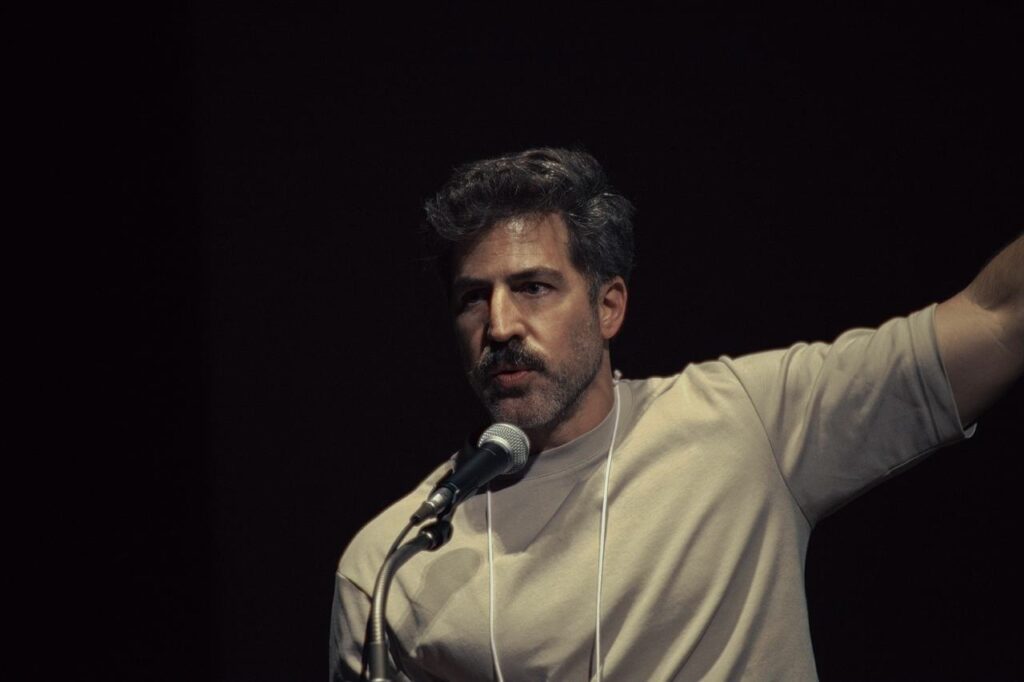
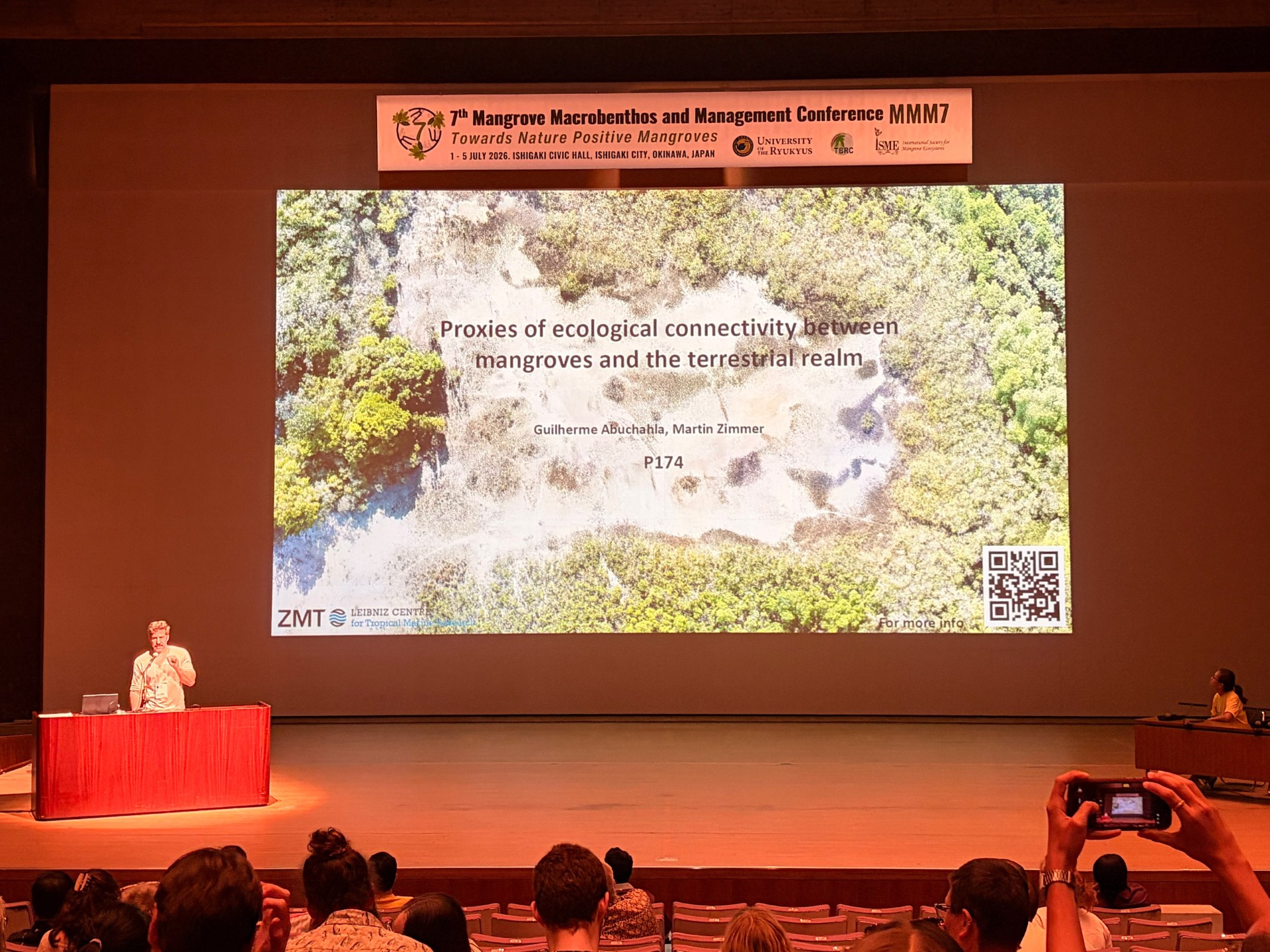
The Middle East Mangrove Knowledge Hub (MEMKH), under the MENA Oceans Initiative by Goumbook, was represented at MMM7 by Guilherme Abuchahla, who presented a technical paper on proxies of ecological connectivity between mangroves and the terrestrial realm. The study identified the molecular signatures of mangrove, saltmarsh, and terrestrial plants on the semi-arid coasts of Brazil and Senegal, and the mechanisms by which they are distributed across the landscape, including the role of specific bacteria in decomposing and redistributing these compounds onto the sediment.