Author: Cyrielle Lam
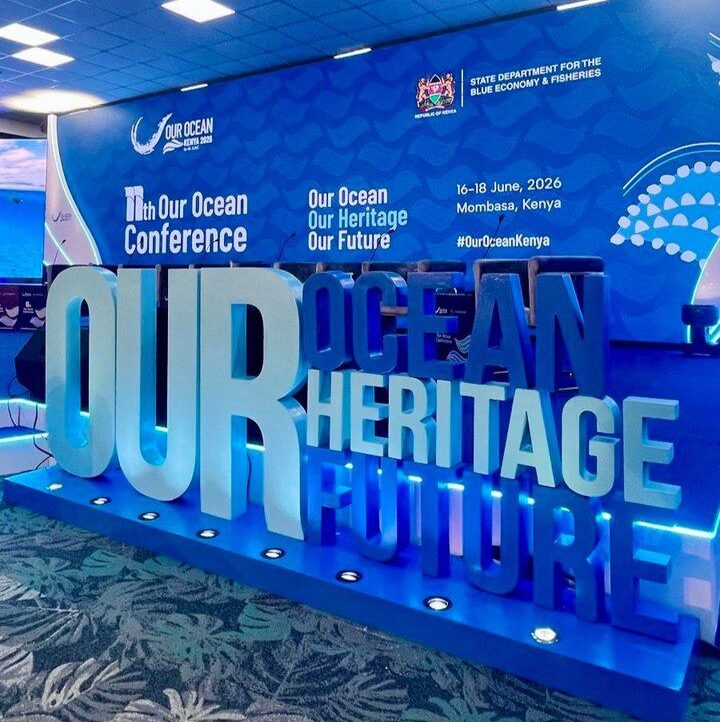
Since the adoption of the Paris Agreement, the ocean has increasingly been recognised as a critical ally in addressing climate change – it must now translate into concrete action. The journey from the 11th Our Ocean Conference in Mombasa, Kenya, to COP31 in Antalya, Türkiye, represents an important opportunity to accelerate these efforts.
The first-ever Our Ocean Conference (16-18 June 2026) held on African soil sent a powerful signal for regional leadership. African countries are not only on the frontlines of climate change and its impacts; they are also shaping global ocean action. Bringing together more than 5,000 participants, the conference generated more than 320 voluntary commitments spanning the sustainable blue economy, marine protection, sustainable fisheries, marine pollution, and ocean-climate action. These commitments were backed by billions of dollars in “mobilised” finance, including a landmark US$250 million pledge from the Government of Kenya for ocean-climate finance and more than €338 million committed by the European Union for global ocean protection.
Yet, the success of these pledges will ultimately be judged by their concrete implementation. As the global community looks towards COP31, the priority must be to transform political momentum into tangible benefits for people, climate, and the ocean.
What role can civil society play to advance ocean-climate action on the road to COP31?
Achieving this will require more than new commitments from governments alone. It will depend on the collective efforts of a wide range of actors – including civil society, businesses, investors, researchers, Indigenous Peoples, youth, and local communities – to help turn commitments into action, strengthen accountability, and accelerate the delivery of climate solutions.
In that context, the ocean community has played an instrumental role in advancing ocean-climate action within the UN Climate Convention, raising the visibility of ocean-based climate solutions and demonstrating how they can contribute to and support mitigation, adaptation, and resilience. The Marrakech Partnership on Ocean & Coastal Zones, which has now evolved into a formal group dedicated to accelerating efforts to preserve ocean and marine ecosystems under the Action Agenda, facilitated this, offering a formal space for the ocean-climate community to coordinate, collaborate, and drive collective action.
To support implementation, the ocean community has also developed practical tools. The Ocean Breakthroughs identify positive tipping points to reach across five key sectors by 2030, while the Ocean Breakthroughs Dashboard tracks progress. Complementing these efforts, the Blue Packageprovides a shared roadmap for accelerating efforts and delivering the outcomes of the first Global Stocktake by 2028. Together, these tools help governments and non-State actors identify priorities, align efforts, monitor progress, and adjust course where needed.
What are the opportunities for the MENA region?
With COP31 taking place in Antalya and both COP31 co-Presidencies – Türkiye and Australia – identifying ocean action as a priority, the next few months offer a timely opportunity to highlight what is happening across the Mediterranean, Red Sea, Arabian Gulf, and wider MENA region.
For a region where coastal ecosystems, economies, and communities are deeply interconnected, ocean-climate action can strengthen resilience, support sustainable development, and accelerate the transition towards a low-carbon and climate-resilient future.
MENA countries – such as the United Arab Emirates who presided over COP28 and put nature at the heart of climate action – are already restoring marine ecosystems and advancing blue economy initiatives, developing sustainable shipping corridors, and nature-based coastal resilience.
Scaling these efforts will require stronger collaboration, public-private partnerships, knowledge sharing, and access to finance. After the Pre-COP in the Pacific sets the stage, MENA Oceans will bring the regional agenda to COP31 and the 4th MENA Oceans Summit (23-24 November 2026).
From regional action to global impact
The journey from Mombasa to Antalya offers a rare opportunity to build on growing global momentum and demonstrate what leadership looks like in practice. By bringing forward solutions, sharing knowledge, investing in innovation, and forging new partnerships, the MENA region can help shape a more resilient future. Success at COP31 will not be measured by the promises made, but by the actions delivered – and by the lasting impact they create for people, nature, and the climate.